
For most of its history, contextual advertising has started with inventory. Supply gets sorted into a taxonomy, the buyer picks categories, and the brand shows up at the very end as a list of exclusions.
We think the order should run the other way.
Start with the brand
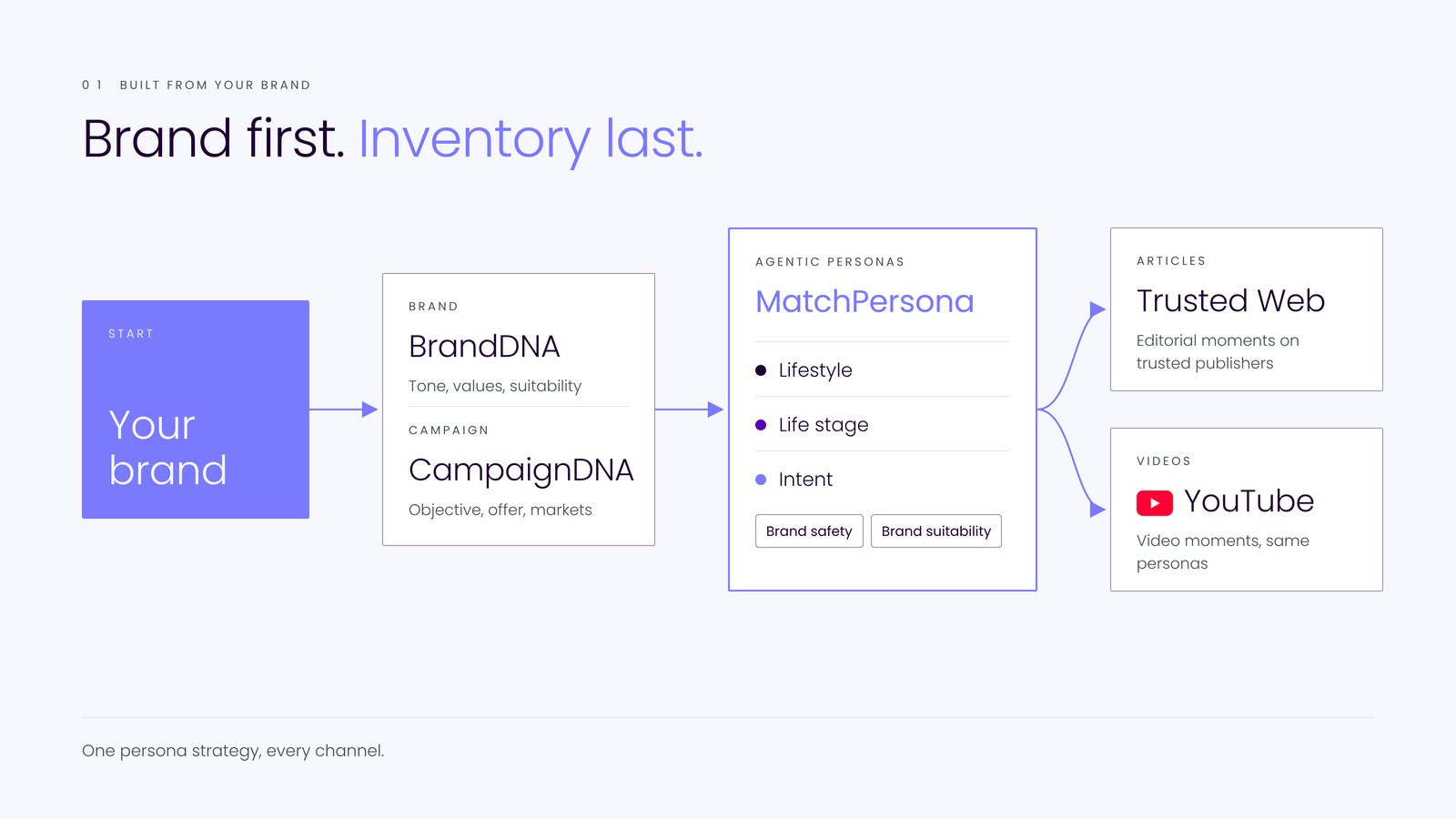
Every campaign at C Wire begins with two objects. BrandDNA describes the brand: its tone, its values, its suitability rules. CampaignDNA describes the campaign: the objective, the offer, the markets, the moment. Both can come from the client's own inputs or be inferred from as little as a landing page URL. Clients can correct anything we inferred and see exactly what we work from. See what BrandDNA and CampaignDNA record.
Then find the people
From those two objects, MatchPersona generates agentic personas in three tiers: lifestyle, life stage and intent. Clients who already have personas can upload them. Our Content Graph then maps each persona to the places where that type of person spends attention.
For lifestyle and life stage personas, those places are often far from the product category. A parent who might buy a family car spends time on school logistics, weekend recipes and short-trip planning long before reading a car review. For intent personas, the category is the point.
Then find the moments
Only now does inventory come in. Articles from trusted publishers and videos on YouTube are vectorised, so our matching engine can link each persona to the editorial and video moments where it is over-represented. Brand safety and brand suitability are part of every persona from the first step.
One persona strategy, every channel
Because the plan starts from the brand, it carries across channels. Platform algorithms tend to optimise towards the lower funnel, often with little incrementality. MatchPersona keeps the plan anchored in the brand and finds the right articles on trusted publishers and the right videos on YouTube with the same personas. Marketing and agency teams keep one strategy and one language with the client, wherever the budget goes. How MatchPersona for YouTube works.
What changes for buyers
- The plan reflects the brand from the first step.
- Activation stays true to the strategy and reaches the intended personas across the whole funnel, so results reflect real impact.
- Reach extends to the places people actually spend time, well beyond the category pages.
- Clients see and approve the plan before anything is bought. Nothing is bought blind.
Try it on your own brand
Paste a landing page URL into Try MatchPersona and see the personas MatchPersona builds for your brand within minutes.