From Attention to Agents: 7 signals that the Open Web is reinventing itself
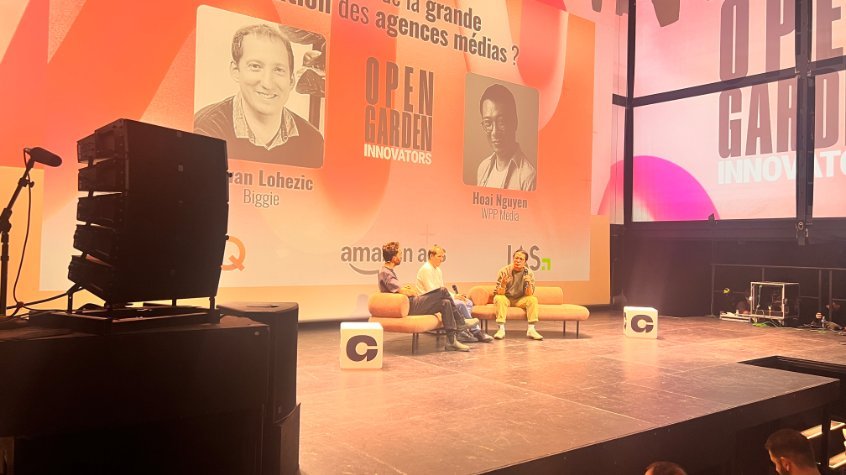
Last week, the first Open Garden Innovator Awards brought together agencies, brands, publishers and technology players in Paris to celebrate what is pushing the advertising ecosystem forward.
Beyond the trophies and case studies, the event revealed something deeper.
A structural transformation of how the open web creates value.
What stood out was not innovation theatre, but operational, measurable and scalable execution across media, data and creativity.
From attention becoming a trading currency, to AI industrialising creative production, to GEO strategies designed for LLM discovery, we are witnessing a systemic shift.
Here are seven signals that show how the open web is entering its next chapter.
1. attention is becoming a trading currency
For years, programmatic advertising optimised towards proxy metrics such as viewability, click through rates and completion rates.
The industry has long been searching for a metric closer to real human impact.
Several initiatives showcased at the event demonstrated how attention measurement is now being deployed at scale, reframing media quality around cognitive engagement rather than simple exposure.
This matters because attention correlates more closely with business outcomes, reshapes how inventory is valued and rewards high quality publisher environments.
Media is gradually being priced on human impact rather than purely technical delivery.
2. retail media and programmatic are converging
The historical divide between branding and commerce is disappearing.
Campaigns presented at the event showed how full funnel activation is becoming native, connecting connected TV exposure, consideration and retail conversion in a single flow.
Clean room environments now allow advertisers to reconcile ad exposure with transaction data, enabling deterministic attribution models that were previously difficult to achieve.
This convergence enables closed loop measurement, media planning tied to revenue and greater accountability across the funnel.
Retail media is not replacing programmatic. It is merging with it.
3. connected TV is becoming interactive commerce infrastructure
Connected TV is evolving far beyond passive video consumption.
Several cases illustrated how CTV can now function as an interactive retail interface through QR driven journeys, augmented reality product experiences and direct to purchase pathways.
CTV is absorbing capabilities from ecommerce, mobile user experience and performance marketing.
The implication is clear. The largest screen in the household is becoming transactional.
4. GEO and LLM discoverability are emerging media disciplines
One of the most forward looking themes discussed was generative engine optimisation.
Brands are beginning to optimise visibility not for search engines, but for AI agents and conversational interfaces.
This includes structuring content for LLM ingestion, publishing authoritative AI readable content and measuring citation rates in AI generated answers.
As conversational discovery grows, optimisation shifts from search rankings to answer inclusion.
Brands are no longer optimising only for clicks, but for AI recommendations.
5. AI is industrialising creativity
Creative production has historically been one of the least scalable elements of advertising.
That constraint is rapidly disappearing.
AI powered creative systems now enable hyper localised creative generation, instant adaptation to context and large scale testing across formats.
Campaigns presented showed how thousands of localised assets can be produced in minutes rather than weeks.
Creativity is no longer handcrafted. It is becoming computational and adaptive.
6. trust frameworks are rebuilding the open web’s value proposition
Transparency and supply path optimisation were central themes throughout the event.
The open web is increasingly differentiating itself through supply path clarity, financial transparency, publisher value recognition and media quality scoring.
In contrast to opaque ecosystems, the open web is positioning audibility and accountability as strategic advantages.
Trust is becoming an economic multiplier.
7. agencies are becoming technology platforms
Another strong signal was agencies building proprietary software.
From workflow automation tools to real time activation systems, agencies are evolving from service providers into technology platforms.
Execution speed is now a competitive advantage, and software is the key enabler.
conclusion: from programmatic to agentic
Individually, each of these signals is meaningful.
Together, they point to a broader shift from automated media buying to autonomous marketing orchestration.
In this emerging model, attention informs investment decisions, AI generates and adapts creative, GEO drives discoverability, commerce closes the attribution loop and intelligent systems optimise continuously.
Programmatic advertising optimised media buying.
The next evolution will orchestrate outcomes.
This transition from attention to agents may define the next decade of the open web.