Bootstrapped vs. VC-Backed in Ad Tech: Six Founders on the Real Trade-Offs
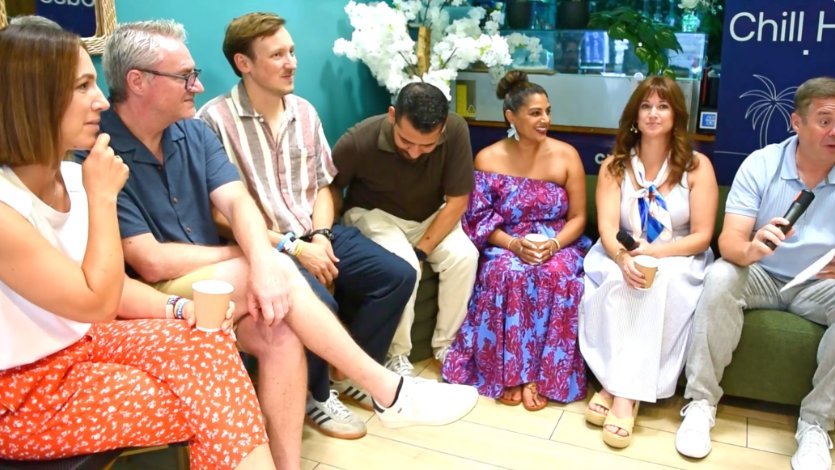
Here is the full session, followed by what I took away from it.

On the panel
Alban Grossenbacher — Co-Founder & CEO, goTom · 10 years, fully bootstrapped
Aubriana Alvarez Lopez — Co-Founder & CMO, Agnitio · 18 months, effectively bootstrapped
Fabrice Courdesses — Co-Founder & CEO, VideoRunRun · agency spinoff, 15-year entrepreneur
Magali Quentel-Rème — Co-Founder & CEO, Opti Digital · 8 years, fully bootstrapped
Priti Ohri — Co-Founder & CEO, Advertible · 3 years, fully bootstrapped
Rui de Freitas — Co-Founder & CEO, C Wire · 5 years, venture-backed
Moderated by Corey Ferengul, Managing Partner at Aperiam and former CEO of Undertone and Magnetic — one of the very few investors focused purely on ad tech.
Why do founders end up bootstrapping in the first place?
The honest answer, at least in this room, is that almost nobody chose it as a strategy. It chose them.
Priti Ohri built Advertible after she and her co-founder were made redundant. She named the product insight first — the market needed a simple plug-in solution for large platforms — and then, a beat later, named the real trigger: they had been laid off, and there was nowhere else to go.
"Comfort does not breed that kind of ambition."
— Priti Ohri
Alban Grossenbacher's version was stranger. He and his co-founder were working inside a Swiss media group, and his co-founder called him to suggest they buy the software's source code from their own employer and leave. His first reaction was that this was crazy — why would they ever sell it to us? They did. Ten years later goTom is still independent and still bootstrapped.
Fabrice Courdesses went the other way entirely: he went looking for an idea, travelled to VidCon in the US, and brought a model back to France because he had decided he was going to start something regardless. He has done that repeatedly for fifteen years.
Three completely different doors into the same room. What none of them had was a funding decision. They had a forcing function.
What does bootstrapping actually cost you?
It costs you the ability to be wrong about timing.
Aubriana Alvarez Lopez described the specific texture of it: payroll is coming, accounts receivable is late, clients haven't paid, and the walls start closing in. Because Agnitio is effectively bootstrapped, everything has to land at the right moment. Her word for it was suffocating — and then, notably, she said the feeling lasts about a day. Something always moves.
Magali Quentel-Rème, eight years into Opti Digital, put the same thing in slower terms. When you start, you have no idea how long it will take or whether it will work at all, and you certainly don't know when the first wins arrive. That uncertainty is not a phase you pass through. It's the operating condition.
The second cost is quieter and, I think, more expensive: the things you never buy. Priti was blunt that as a bootstrapped company there is a long list of things they simply do not invest in. She makes one deliberate exception — good lawyers — on the grounds that when you are serious about something, you do it properly. Everything else waits.
And what does raising money actually cost you?
I'll answer this one myself, because I'm the one on the panel who took the money.
You raise, and then you spend more. That is not a failure of discipline; it is the entire point of the instrument. But if revenue doesn't arrive on the same curve, the gap between what you're spending and what you're earning becomes pressure — and that pressure is constant, not occasional. Bootstrapped founders live with acute cash anxiety. Funded founders live with chronic velocity anxiety. I'm not sure which is worse. They're just different.
The cost I did not anticipate is what optionality does to a founding team. Money creates options; options create forks; and forks are where co-founding teams break. At one point a company came to us with a genuinely juicy offer. Turning it down was not a financial decision — it was a decision to tell everyone that we would keep going through a difficult stretch for an unknown length of time, with no guarantee the opportunity would come back.
Not everyone wanted that. That isn't betrayal. It's what happens when people are finally honest about what they want from their own lives. We started with three co-founders, went to four, and came down to two.
Corey's framing of it afterwards was the correct one: there are as many stories of companies that turned down an acquisition and were right as there are companies that took one and were right. Nobody knows in advance. The job is not to pick correctly. The job is to still have options.
What did the bootstrapped and the funded founders actually agree on?
Three things, and they came up unprompted from both sides of the table.
1. Discomfort is the job, not a phase of the job. Aubriana said it most directly: every founder in the room is used to being uncomfortable, and if you don't like being uncomfortable, don't start a company. Nobody disagreed. Nobody softened it.
2. The co-founder decision is load-bearing. Magali, who ran her first company alone and swore never to do it again, described the real mechanism: on the day you lose the deal or the employee blows up, the other person is up, and they say come on, tomorrow is better — and next week you do it for them. Alban's version was that a co-founder must complement you, because two people with identical skills is a net loss to the company. Aubriana went further: shared values, not just complementary skills, because everything else is downstream of that. It is, as Corey put it and everyone immediately confirmed, a marriage — one that happens to be a hundred percent about money.
3. You have to manufacture wins, because the real ones are slow. Both bootstrapped and funded founders said the same thing here. The big deal has a long sales cycle. So the win you celebrate this week might be a small sale, or industry recognition, or a stranger at a party saying I've heard of you — and you take it, because that is what you have.
The three answers I keep thinking about
Asked what they'd tell someone who announced, after a couple of drinks, that they were starting a company:
Fabrice: build in a field where you are already legitimate. His first company was in wine — a genuine passion — and turning the passion into work destroyed the passion and he wasn't an expert. He got the passion back only after he got out.
Alban: find the co-founder who complements you; prioritise the tasks that benefit the company rather than the tasks you happen to enjoy; and keep going. He'd seen a picture on a wall in his Cannes rental that week: flowers need time to bloom. He thinks that describes nearly every startup.
Magali and Aubriana, converging: know yourself first. If you don't know what your conviction is, you will eventually fail yourself and fail the person who joined you.
What surprised me
I expected the funding question to be the fault line. It wasn't. The bootstrapped founders and the funded founders described almost identical days: the same doubt, the same manufactured wins, the same reliance on one other person to carry the week you can't.
Where we actually differed was in what we were allowed to be wrong about. Bootstrapping punishes errors of timing. Venture punishes errors of pace. Pick the one whose failure mode you can personally live with — because you will meet it.
The one thing I said on stage that I'd repeat to any founder reading this: build the company you can step out of for two days. Corey's response was that too many founders build an organisation they cannot leave, and that this is not a resilient organisation. He's right, and it's a harder test than it sounds.